
When East Zone decided to bat in Chennai on the opening day of the 2026 Duleep Trophy final, little did anyone imagine that by the close of play, South Zone would be grappling with a challenge far greater than merely taking wickets—that of regaining a foothold in the match.
By stumps, East Zone had reached 385/4 in 79 overs. Ishan Kishan was unbeaten on 111, with Kumar Kushagra batting alongside him on 63. An unbroken 144-run partnership between the two made the final session of the day incredibly difficult for South Zone.
However, if you look only at the score of 385/4 and conclude that Day 1 belonged entirely to East Zone, you would be missing a crucial part of the story.
South Zone did have their opportunities during the day and managed to take wickets; at one point, it even seemed possible that East Zone’s innings could be halted.
Yet, whenever South Zone felt the match was opening up in their favor, East Zone somehow managed to wrest the momentum back. That was, perhaps, the defining narrative of the first day.
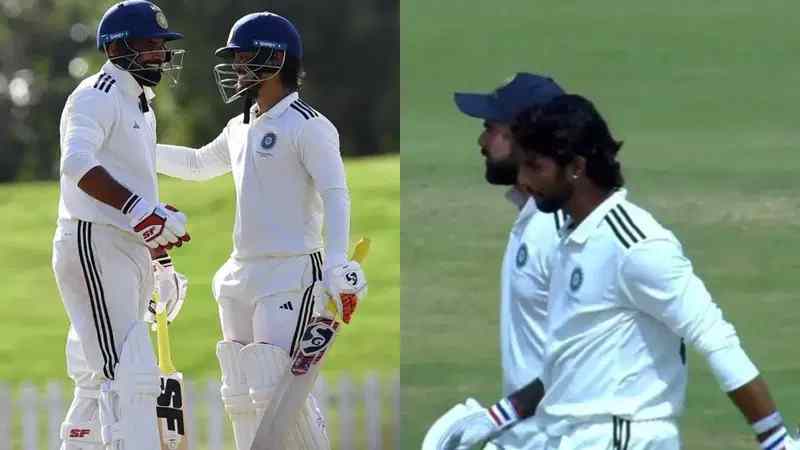
Right from the start, East Zone made it clear that they hadn’t come merely to play the final.
In a high-stakes match like the final, the opening morning is often far from easy for batsmen. The new ball, fresh bowlers, and early nerves all come into play simultaneously. Yet, very little of that was evident in East Zone’s start.
Abhimanyu Easwaran and Vaibhav Sooryavanshi did not give South Zone much of a chance to settle in right from the start. The duo added 100 runs for the first wicket, providing East Zone with the kind of start essential for any final. Easwaran scored 72 runs, while Vaibhav played a brisk knock of 44 off just 37 balls.
This partnership was significant not just because of the runs scored.It forced South Zone to rethink their strategy right from the start.
Should an attacking field be set? Should the bowlers be rotated constantly to disrupt the rhythm? Or should they simply wait for the batsmen to make a mistake?
But while South Zone was still searching for answers to these questions, Vaibhav began playing the match on his own terms.
Vaibhav Sooryavanshi refused to back down in the face of experience.
Vaibhav was up against an experienced fast bowler like Mohammed Siraj. Typically, a young batter prefers to take some time to settle in during a major final, but Vaibhav did not alter his approach.
By hitting boundaries in one of Siraj’s overs, he made it clear that he hadn’t come to the crease merely to watch the ball. His fearless batting was one of the most talked-about moments of Day 1. However, the boundaries weren’t the only interesting aspect of his innings.
What was truly intriguing was the dilemma he posed to the South Zone bowling attack right from the start: if they played too defensively to contain him, he would score runs; if they attacked, he would have the opportunity to exploit the gaps.
However, first-class cricket has a distinct nature of its own. here, a good start does not always guarantee a big innings.
Vaibhav was dismissed after scoring 44 runs, but by then, he had already done his job. He hadn’t merely scored runs; he had shifted the tempo of the match’s opening phase. And following his departure, the East Zone innings faced a new question.
Would South Zone now be able to seize this opportunity?
South Zone had a chance, but Shikhar Mohan changed the script.
South Zone must have certainly felt a glimmer of hope after Vaibhav’s dismissal. Shortly thereafter, Abhimanyu Easwaran was also run out after scoring 72 runs. For the first time, it seemed as though South Zone might stage a comeback in the match.
However, Shikhar Mohan did not allow that pressure to persist for long. He scored 85 runs off 120 balls, stabilizing the East Zone innings once again. His knock included 9 fours and 3 sixes, yet judging the innings solely by the boundaries would be misleading; he attacked at the right moments and helped East Zone maintain its scoring momentum despite the fall of wickets.
This is where the problem began to escalate for the South Zone. They were taking wickets, but East Zone always had a new batsman ready to steady the innings. And then came captain Ishan Kishan.
This was the moment the story of Day 1 took its most significant turn.
Ishan Kishan’s century was not just an individual achievement.
Playing a final as captain brings a unique kind of pressure.
You have to manage your own batting while also keeping the bigger picture of the match in mind. Ishan Kishan handled both responsibilities simultaneously on Day 1.
He scored an unbeaten 111 off 135 balls, becoming South Zone’s biggest headache by the end of the day’s play. His innings included 14 fours and a six.
However, the timing of his innings was more significant than the score itself. he spent valuable time at the crease just when East Zone needed stability.
Once the bowlers eased the pressure, they began to score. And as the day drew to a close, they sent a clear message to South Zone that East Zone wasn’t just looking to stop around the 300-run mark.
Because, despite Ishan’s innings, South Zone still faced another major challenge. Kumar Kushagra was at the other end, and their partnership made the final part of the day extremely difficult for South Zone.
Kumar Kushagra’s innings: The story that might get left behind the headlines.
Ishan Kishan’s century is the biggest headline of Day 1. Vaibhav’s aggressive batting also drew plenty of attention.
However, if one looks closely at Day 1, Kumar Kushagra’s unbeaten knock of 63 runs might prove to be just as crucial for East Zone.
They didn’t just support Ishan; they forced South Zone to keep bowling.
In first-class cricket, the biggest partnership isn’t always the one that scores the most runs. The most significant partnership is the one that compels the opposition to give up hope. Ishan and Kushagra did exactly that.
When Shikhar Mohan was dismissed after scoring 85 runs, East Zone was at 241/4. South Zone must have felt that the path to the lower order had opened up.
However, Kishan and Kushagra subsequently stitched together an unbeaten partnership of 144 runs. In the final 10 overs of the day, East Zone scored 74 runs without losing a wicket, and that was when South Zone’s concerns began to mount.
Because 385/4 is certainly a big score. But even more significant is the fact that the East Zone innings is not yet over.
The final hour of Day 1 was perhaps the most painful for the South Zone.
Sometimes in a cricket match, there comes a moment when the scoreboard and the mood of the match shifts rapidly.
The final phase of Day 1 was exactly like that for East Zone.
South Zone had hoped to claim one or two more wickets before the day ended, but that did not happen. Ishan Kishan and Kumar Kushagra not only survived but also accelerated the scoring.
Kushagra displayed positive batting against off-spinner Tripurana Vijay in the final phase, and by the close of Day 1, both batsmen had put South Zone firmly under pressure.
For South Zone, the morning of Day 2 is not merely the start of a new day; it is arguably the most crucial beginning of the entire final. Because the question now is simply this.
Can they halt East Zone early? If the answer is no, then the score of 385/4 could prove to be just the beginning.
What was South Zone’s biggest mistake?
South Zone took four wickets, so it would be incorrect to say that their bowling was completely poor. however, they struggled to maintain that momentum after taking the wickets.
After Abhimanyu and Vaibhav, Shikhar Mohan steadied the innings. Following Shikhar, Ishan Kishan and Kumar Kushagra once again made South Zone wait a long time for a wicket. This proved to be the greatest strength of East Zone’s batting.
A new batsman arrived after the wicket fell and made South Zone realize that the job wasn’t done yet. And perhaps this will be the biggest challenge for South Zone on Day 2.
They won’t just need wickets, they will need wickets in quick succession.
Because if a settled partnership is broken but the next one also goes on to be a long one, East Zone’s score could quickly move beyond South Zone’s reach.
What will happen on the morning of Day 2?
The first session of Day 2 will likely be one of the most crucial sessions of the entire match.
The ideal start for South Zone is clear: take the new ball, dismiss Ishan Kishan early, break the partnership with Kumar Kushagra, and try to restrict East Zone to a total under 450. However, in cricket, planning is easy, but execution is difficult.
Ishan is unbeaten on 111, he is well-settled and would have by now gained a good understanding of the rhythm of both the pitch and the bowlers.
Kushagra is also unbeaten on 63, and he has already demonstrated that he hasn’t come here merely to stand at the other end.
If the duo can successfully navigate the first hour of Day 2, the trouble for South Zone could escalate rapidly. A total of 450 or 500 runs would place significant scoreboard pressure on South Zone’s batting lineup.
This is precisely the juncture where East Zone can leverage its greatest strength, its bowling attack.
Mohammed Shami’s real test might be about to begin.
Day 1 belonged to the East Zone batters. However, if East Zone posts a massive first-innings total, the next major chapter of Day 2 could well be scripted by Mohammed Shami.
Shami is playing his 100th First-Class match in this final, and his red-ball experience could prove to be a significant advantage for East Zone.
Batting against a massive total tests more than just technique; the scoreboard constantly weighs on the batter’s mind.
They might play at a delivery they should have left alone, attempt a risky run, or play an unnecessary shot in a bid to break free from the pressure. These are precisely the moments experienced bowlers wait for.
If East Zone reaches a total of 450 or more, South Zone’s first innings will present a challenge that goes beyond merely scoring runs.
They will also have to contend with the pressure imposed by the East Zone bowling attack. Only then will the true magnitude of the advantage gained on Day 1 become apparent.
So, is East Zone now the favorite to win the final?
East Zone certainly holds the momentum after Day 1. With a score of 385/4, two set batsmen, and a strong bowling attack, this is a highly encouraging position for any team on paper.
However, the winner of a five-day First-Class final cannot be decided based on just one day’s play; South Zone still has a chance to make a comeback.
If they can claim early wickets on the morning of Day 2 and prevent East Zone from racing too far ahead, the match could open up again.
Subsequently, their batting performance will determine whether they merely stay in the contest or manage to put East Zone under pressure.
In short, Day 1 has given East Zone the advantage, but Day 2 will reveal just how significant that advantage is.
Global Sports Wire Day 2 Prediction
East Zone is currently in a strong position, and their objective at the start of Day 2 will be clear: to make the first-innings score as massive as possible.
South Zone will make every effort to send Ishan Kishan and Kumar Kushagra back to the pavilion during the first hour of the second day.
If South Zone manages to claim two wickets in the opening session, the balance of the match could shift.
However, if East Zone advances their score without suffering significant setbacks, South Zone could find themselves facing a daunting first-innings total.
East Zone holds a clear advantage heading into Day 2, but the first session could represent one of South Zone’s last real hopes of turning the tide.
Final Thought
On Day 1, East Zone didn’t just score runs; they posed serious questions to South Zone.
Early on, Vaibhav Sooryavanshi demonstrated that age doesn’t necessarily breed fear in big matches. Abhimanyu Easwaran laid the foundation, and Shikhar Mohan carried the innings forward.
Ishan Kishan played a magnificent century while shouldering the responsibility of captaincy, and Kumar Kushagra quietly built a partnership that compounded South Zone’s woes by the end of the day.
But the final isn’t over yet. In fact, the story could get even more intriguing, as Day 1 revealed just how formidable East Zone can be.
Now, Day 2 will show us the extent of South Zone’s fighting spirit. And perhaps, in the very first session of the second day, the final’s biggest question will demand an answer.
Will South Zone find a way back, or will East Zone turn this start of 385/4 into a lead from which a comeback becomes almost impossible?