
Two different questions get mixed together constantly in football, and they mean genuinely different things: “how much extra time is being added?” and “how long does extra time last?” One is about a referee making up for lost minutes inside a normal match. The other is about an entirely separate 30-minute period played only when a knockout match absolutely needs a winner. Here’s exactly how both work.
Extra time in football lasts 30 minutes total, split into two 15-minute halves, and is only played in knockout matches that are still tied after 90 minutes. This is different from stoppage time (also called added time or injury time), which is a much shorter amount — typically 3 to 10+ minutes — added at the end of each half of a normal 90-minute match to make up for time lost to injuries, substitutions, and other delays.
Key Takeaways
- Extra time = 30 minutes (two 15-minute halves), played only in knockout-stage matches tied after 90 minutes.
- Stoppage time ≠ extra time. Stoppage time is the shorter amount of added minutes at the end of each half of regular play, calculated by the referee for delays.
- Extra time is always played in full — there’s no “golden goal” anymore; even if a team scores early, the full 30 minutes still gets played.
- If still tied after extra time, the match goes to a penalty shootout.
- Recent tournaments have seen much longer stoppage time than in the past, sometimes 10+ minutes per half, due to a 2022 shift in how referees calculate delays like goal celebrations and VAR reviews.
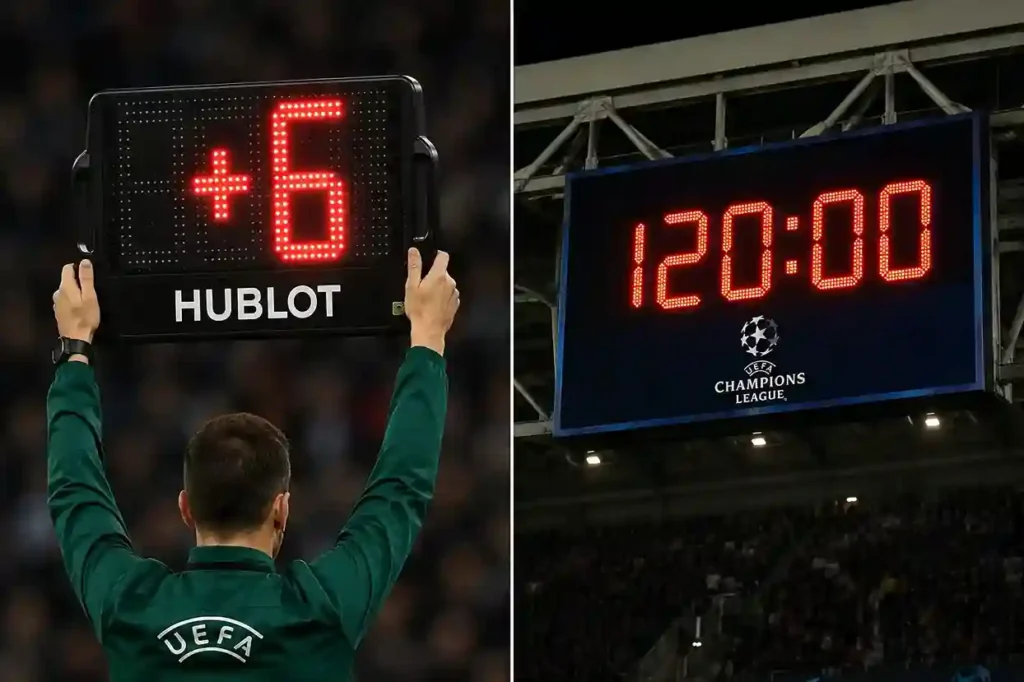
Stoppage Time vs Extra Time: Not the Same Thing
This is the single biggest source of confusion in the question “how much extra time is there in football,” so it’s worth separating clearly.
Stoppage time — also called added time or injury time — happens in every single match, without exception. At the end of each 45-minute half, the referee adds back a number of minutes to make up for time lost to delays: injuries, substitutions, VAR checks, time-wasting, and goal celebrations. There’s no fixed length; it’s usually somewhere between 3 and 10-plus minutes per half, and it changes from match to match depending entirely on how much genuine playing time was lost. Only the referee decides how much gets added, based on what actually happened during that half.
Extra time, on the other hand, is a completely different thing. It only exists in knockout-stage matches — games where a winner absolutely has to be decided, so a draw isn’t an acceptable result. It’s triggered only if the score is still level after the full 90 minutes (plus that match’s stoppage time). And unlike stoppage time, its length is fixed by the Laws of the Game rather than decided by a referee on the fly: it’s always exactly 30 minutes, split into two 15-minute halves, with teams switching ends at the break.
Put simply: every match has stoppage time. Almost no match has extra time — it only shows up when a knockout game genuinely can’t end in a draw and the teams are still tied after regulation.
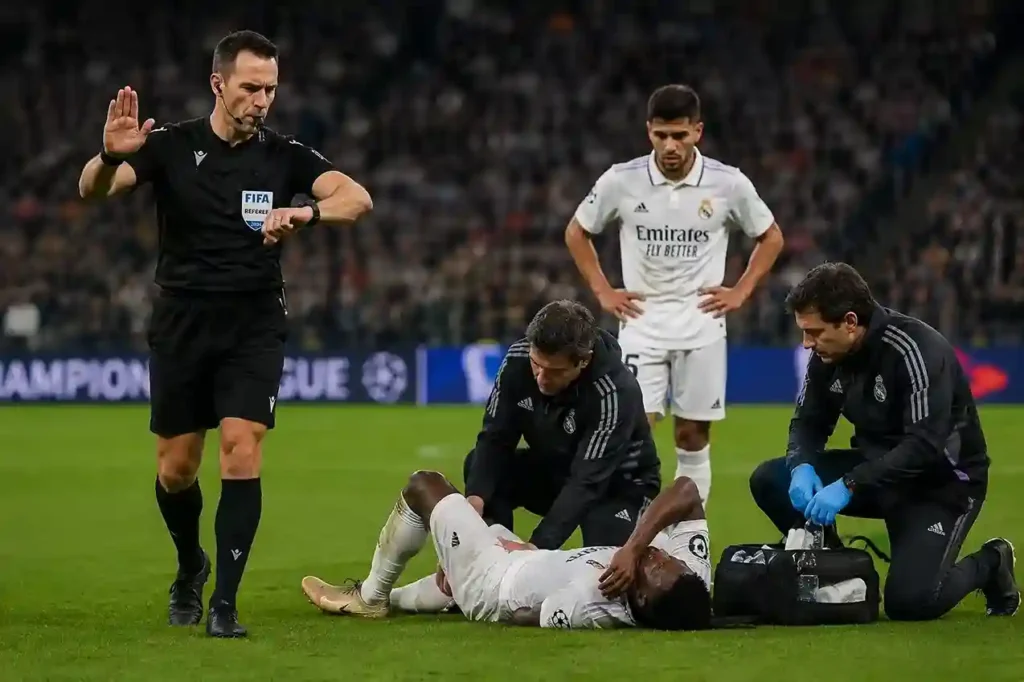
How Long Is Extra Time in Football?
Extra time lasts a total of 30 minutes, divided into two 15-minute halves, with teams switching ends at the interval just like in a normal match. Since a change to the rules in 2006, extra time is always played in full — there’s no “golden goal” rule anymore, where a single goal would instantly end the match. Even if a team scores in the first minute of extra time, the full 30 minutes is still played out.
Extra time only applies in knockout-stage matches —
competitions or rounds where the match cannot end in a draw, because a winner needs to advance. Group-stage matches at tournaments like the World Cup can and do end in a draw, with no extra time played at all.

What Happens Before and During Extra Time
- A short break first. Teams typically get around a five-minute break between the end of 90 minutes and the start of extra time to regroup, though there’s no full return to the dressing room with an extended team talk the way there is at normal half-time.
- A brief interval at extra time’s halfway point. Teams switch ends after the first 15-minute period, with only a short pause, not a lengthy break.
- Stoppage time still applies within extra time. The referee can add time at the end of each 15-minute period too, for the same reasons as normal time — injuries, substitutions, time-wasting — though this is usually just one or two minutes per period rather than the longer amounts sometimes added in regular time.
- An extra substitution is allowed. Teams normally get five substitutions across a 90-minute match, but if the game goes to extra time, each side is granted one additional substitute — six in total.
What Happens if Extra Time Ends Level?
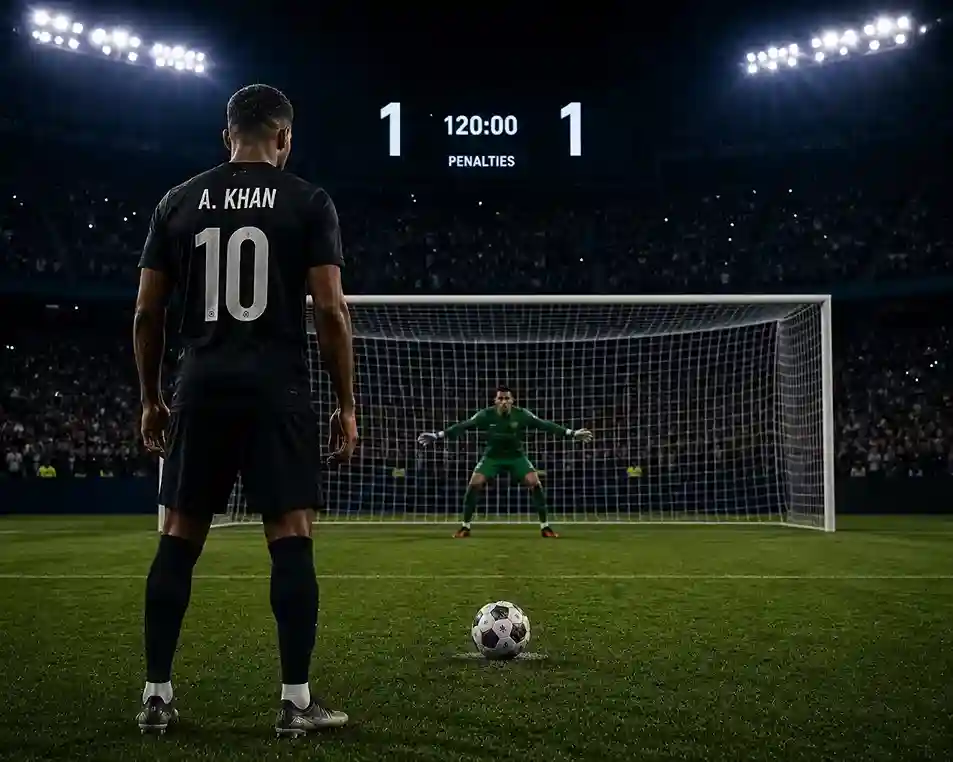
If the score is still tied after the full 30 minutes of extra time, the match is decided by a penalty shootout. Each team takes alternating kicks from the penalty spot, initially five each. If the two teams are still level after five penalties each, the shootout moves into sudden death — one kick each per round — until one team scores and the other misses in the same round.
Why Stoppage Time Has Gotten So Much Longer Recently
If matches have felt longer in recent years, that’s not just perception. Starting at the 2018 World Cup and increasing sharply from the 2022 tournament onward, referees have been instructed to more precisely calculate every delay during a match — goal celebrations, substitutions, injury treatment, and VAR reviews are now all added back into the clock far more strictly than in the past. This has occasionally produced stoppage time totals well into double digits in a single half, a noticeable shift from the traditional “2 to 4 minutes” fans were used to seeing for decades before.
Suggested Reads:
Frequently Asked Questions
Q. How long is extra time in football after 90 minutes?
Extra time lasts 30 minutes total, split into two 15-minute halves, and is only played in knockout-stage matches that are still tied after the initial 90 minutes.
Q. How much extra time is added after 90 minutes?
This depends on what’s meant by “extra time.” If referring to stoppage/added time at the end of a normal match, it’s typically 3 to 10+ minutes depending on delays during that half. If referring to the separate knockout-stage extra time period, it’s always a fixed 30 minutes.
Q. Is extra time the same as stoppage time?
No. Stoppage time is a short amount of added minutes at the end of each half of a normal 90-minute match. Extra time is a completely separate, fixed 30-minute period played only in knockout matches still tied after 90 minutes.
Q. Does extra time end early if a team scores?
No. Since a 2006 rule change removed the “golden goal,” extra time is always played in full for all 30 minutes, regardless of when a goal is scored.
Q. What happens if the score is still tied after extra time?
The match moves to a penalty shootout, with each team taking alternating kicks from the penalty spot until a winner is determined.
Q. How many substitutions are allowed in extra time?
Teams get five substitutions during the initial 90 minutes, plus one additional substitute if the match goes to extra time — six in total.