
Vaibhav Sooryavanshi produced a masterclass in calculated aggression, steering India to 192 for 5 wickets in the third and final Twenty20 International against Zimbabwe at Harare Sports Club on Sunday, July 26, 2026. The left-handed batter’s composed 81-run knock off 49 deliveries formed the backbone of India’s total on a sluggish surface that tested the technique of both batting sides throughout the afternoon.
India, captained by Shreyas Iyer and already leading the three-match series 2-0 after commanding victories in the opening two encounters, looked to apply the finishing touch with an emphatic performance. The Zimbabwean bowling unit, led by Brad Evans and Wesley Madhevere, showed glimpses of resistance, but India’s middle-order contributions ensured a competitive total on a ground where scoring runs demanded patience and precision.
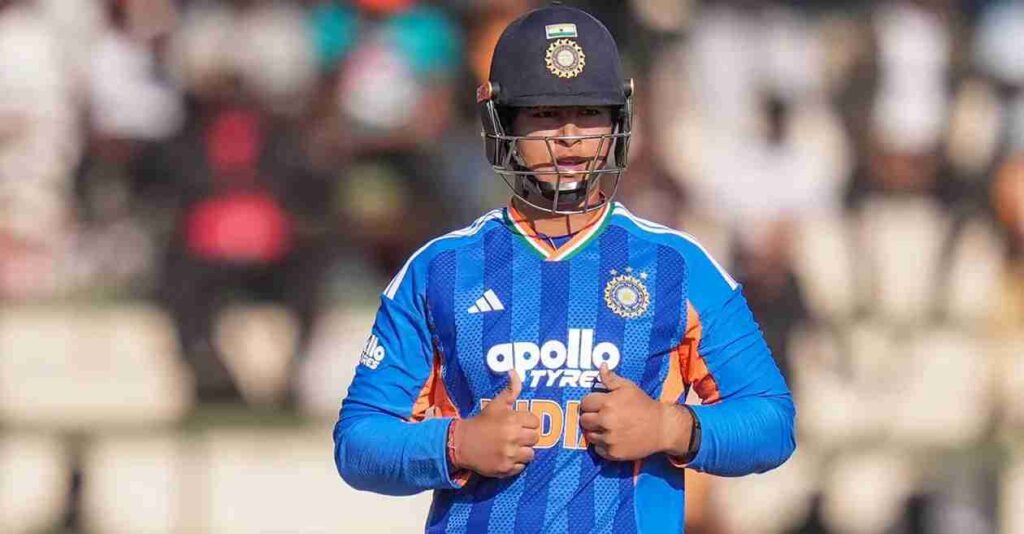
Match Summary: India’s Path to 192/5
India won the toss and elected to bat first, a decision that allowed them to assess the pitch conditions and set the tone for the contest. The visitors’ powerplay yielded mixed fortunes. While Vaibhav Sooryavanshi and Ishan Kishan established early momentum with intelligent stroke-play, India lost a top-order wicket within the first six overs as the Zimbabwean attack found their rhythm.
By the end of the powerplay phase (overs 1-6), India had accumulated 64 runs with one wicket down. This foundation proved crucial, as Sooryavanshi accelerated methodically, converting a half-century into a potential match-defining innings. His opening stand with Kishan produced a 50-run partnership in 29 balls, allowing India to cross the 100-run mark by the 11th over while maintaining wickets in hand.
Shreyas Iyer, India’s captain, arrived at the crease and attempted to capitalize on the good work of his opening pair. He and Sooryavanshi built a third-wicket partnership worth 50 runs in 28 balls, showcasing the kind of controlled aggression that T20 cricket demands. However, Iyer’s dismissal in the middle overs—attempting to hit over the top and finding the fielder on the deep—interrupted India’s momentum temporarily.
Tilak Varma and Rinku Singh then joined forces to add significant runs in the death overs. While Sooryavanshi was eventually dismissed by Wesley Madhevere for 81 off 49 balls, Rinku Singh provided the late impetus with a cameo knock, hitting 13 runs off his final few deliveries before miscuing a low full-toss from Blessing Muzarabani to Wessly Madhevere in the deep in the final over.
India’s total of 192 runs fell eight short of the psychological 200-mark, yet the score represented a formidable challenge on a surface that offered minimal pace and variable bounce.
Vaibhav Sooryavanshi’s 81: A Lesson in T20 Temperament
The standout performance of India’s innings came from left-hand batter Vaibhav Sooryavanshi, whose 81-run contribution proved decisive in accelerating India past the 150-run threshold at the halfway point. What distinguished Sooryavanshi’s knock was not merely the quantum of runs, but the manner in which they were scored—a reflection of maturity unusual for the young batter at the international level.
Sooryavanshi’s strike-rate of 165.3 runs per 100 deliveries demonstrated his willingness to attack, yet his dismissal came only when he had exhausted more conventional scoring opportunities. The left-hander struck six boundaries and two sixes during his 49-ball stay, employing the pull shot and the drive through the covers with particular effectiveness. Against Zimbabwe’s bowling attack, which combined pace (through Brad Evans and Blessing Muzarabani) with spin variations, Sooryavanshi displayed excellent footwork and shot selection.
Brad Evans, the Zimbabwean quick, reflected on his encounter with Sooryavanshi after the innings. “Obviously, big player and he is going to do amazing things but I didn’t want him to get his first hundred against Zimbabwe, so I put in extra effort there,” Evans stated, acknowledging both the quality of Sooryavanshi’s batting and the urgency with which the Zimbabwean bowlers sought to disrupt his rhythm.
Batting Contributions: Kishan, Iyer, and the Lower-Order Cameos
- Ishan Kishan (Wicket-Keeper): The Saurashtra-born batter opened alongside Sooryavanshi and played his role in establishing the first-wicket stand. Though dismissed after compiling useful runs in the powerplay, Kishan’s aggressive approach set the tone for India’s innings.
- Shreyas Iyer (Captain, Middle Order): As captain, Iyer walked out following the loss of an early wicket and attempted to consolidate India’s position. His partnership with Sooryavanshi added 50 runs from 28 deliveries, though his dismissal—attempting to go over the top against a slower ball—highlighted the fine margins in T20 cricket between progression and regression.
- Tilak Varma (Middle Order): The young left-hand batter worked with Rinku Singh to add crucial runs in the middle overs, ensuring that even after Sooryavanshi’s departure, India maintained scoring momentum. Varma’s ability to rotate strike and take calculated risks reinforced India’s aggressive intent.
- Rinku Singh (Lower Order): Singh provided the late-innings acceleration that T20 cricket often demands. His cameo in the final overs—including a four over fine leg off Blessing Muzarabani—added valuable runs before he was caught at deep cover attempting a low full-toss in the 20th over.
Zimbabwean Bowling: Efforts on a Difficult Surface
Zimbabwe’s bowling attack, despite fielding an experienced ensemble, struggled to impose sustained pressure on India’s batting lineup. The Harare Sports Club pitch, with its sluggish surface and inconsistent bounce, presented challenges for seamers attempting to extract movement.
- Brad Evans (Right-Arm Fast): Evans opened the bowling and took two wickets in his spell, including the prized scalp of Vaibhav Sooryavanshi via the catch route. His post-match reflections suggest a bowler working to develop counter-strategies against India’s aggressive batting unit, though his early overs were expensive.
- Wesley Madhevere (Left-Arm Orthodox Spinner): The seasoned spinner removed Sooryavanshi, who had been consolidating India’s innings, claiming his scalp in a key moment of the match. His ability to deceive batters through flight and variation proved valuable in the middle overs.
- Blessing Muzarabani (Right-Arm Fast): Muzarabani, a regular presence in Zimbabwe’s bowling lineup, maintained line and length throughout the encounter. His slower deliveries in the death overs accounted for Rinku Singh, adding to Zimbabwe’s wicket tally late in the Indian innings.
- Ben Curran (Right-Arm Fast): The younger Curran sibling contributed to Zimbabwe’s bowling efforts, though the exact details of his performance statistics are embedded within the broader match context where India’s batters maintained ascendancy.
Pitch Report and Contextual Factors
The Harare Sports Club pitch presented a classic mid-season African T20 surface: slow, providing minimal pace for fast bowlers, yet offering occasional variable bounce that could unsettle batters unfamiliar with such conditions. The average first-innings T20I total at this ground hovers around 155 runs, making India’s 192-run total a competitive effort reflecting both the effectiveness of their batting approach and the quality of their batting talent.
The ground’s fast outfield compensated for the pitch’s lack of pace off the surface, allowing boundaries to flow once batters identified the right areas. Sooryavanshi’s footwork and placement—steering the ball into gaps rather than relying solely on power—enabled him to accumulate runs at a healthy rate despite the surface’s resistance.
Series Context: India’s Path to the Series Finale
India’s entry into the third T20I arrived with the series already decided in their favor. The Men in Blue’s performance trajectory across the three-match encounter illuminates the depth of their current T20 squad:
- 1st T20I Result: India secured a comfortable seven-wicket victory after restricting Zimbabwe, demonstrating superior bowling composure through seamer Mayank Yadav’s two-for performance and consistent fielding.
- 2nd T20I Result: India posted 219 runs for 5 wickets before bowling out Zimbabwe for just 129 runs, claiming a dominant 90-run victory. This result effectively ended Zimbabwe’s hopes of leveling the series.
- 3rd T20I Significance: The finale offered India an opportunity to demonstrate consistency and give opportunities to squad members while maintaining intensity. Zimbabwe, conversely, sought to salvage pride and secure at least one victory from the tour.
India’s Bowling Arsenal: Impact and Inexperience
India’s selected bowling lineup included several players operating at earlier stages of their international careers. This composition—deliberate given the series outcome—meant that Zimbabwe possessed genuine opportunities to build a successful chase should their batting unit respond with discipline and aggression.
- Mayank Yadav (Right-Arm Fast): The pacer, who claimed two wickets in the 1st T20I and earned player-of-the-series recognition for his comeback performance, represented India’s seam-bowling spearhead. His presence provides India with pace and hostility unavailable during periods of his recent absence from the setup.
- Ravi Bishnoi (Leg-Spin): The young leg-spinner, identified for his effectiveness in the earlier matches and known for his variations, provided India with orthodox spin bowling. His removal of Ben Curran during Zimbabwe’s chase signaled his continued threat during the middle overs.
- Prince Yadav (Right-Arm Leg-Spin): Another member of India’s inexperienced bowling unit, Prince Yadav had accumulated four wickets across the series, establishing himself as a potential long-term resource in India’s T20 plans.
Chase Scenario: What Zimbabwe Required
For Zimbabwe to make a contest of the third match, Sikandar Raza’s squad needed to overcome the twin challenges of India’s total and the pitch’s slowness. A target of 193 runs required an aggressive powerplay followed by calculated risk-taking in the middle overs. The removal of key batters like Ben Curran and Dion Myers early in the chase—courtesy of Mayank Yadav’s incisiveness and Ravi Bishnoi’s variations—complicated Zimbabwe’s pathway to victory.
Zimbabwe’s lower-order resistance (highlighted by contributions from players like Brian Bennett and Ryan Burl in the 2nd T20I) offered faint hopes, but the absence of India’s senior bowling players meant young bowlers would carry the burden of defending the total. The match remained competitive through the chase phase, with India’s win probability standing at 75.46% against Zimbabwe’s 24.54% at a mid-innings juncture.
Key Takeaways and Match Analysis
- Sooryavanshi’s Maturity: The left-hander’s composed 81-run knock demonstrated a player evolving beyond reliance on aggression alone, integrating temperament with explosive intent—a hallmark of enduring T20 success.
- India’s Depth: Despite resting senior bowlers and including inexperienced names, India posted a competitive total, reflecting squad depth across batting and bowling.
- Zimbabwe’s Bowling Performance: While Brad Evans and Wesley Madhevere showed glimpses of quality, sustained penetration remained elusive on a pitch offering minimal assistance to seam bowlers.
- Shreyas Iyer’s Captaincy: Iyer’s maiden series victory as captain in the second T20I, now followed by the opportunity to complete a whitewash, signals India’s confidence in the new leadership structure.
- Series Conclusion: The three-match tour proved decisive in determining India’s superiority in the format over the current Zimbabwean setup, with the Men in Blue demonstrating superior batting depth, bowling consistency, and fielding alertness.
Suggested Reads
Zimbabwe vs India 3rd T20I – FAQs
India posted 192/5 in their full 20 overs at Harare Sports Club on July 26, 2026.
Vaibhav Sooryavanshi scored 81 runs off 49 balls, including 6 fours and 2 sixes. He was India’s top scorer.
Brad Evans, Wesley Madhevere, and Blessing Muzarabani were among Zimbabwe’s main wicket-takers, dismissing key Indian batters.
The match was the series finale, with India already leading 2-0 and aiming to complete a whitewash over Zimbabwe.
Yes. Captain Shreyas Iyer was dismissed while attempting an attacking shot, finding a fielder in the deep after making a useful contribution.
Rinku Singh played a valuable late-order cameo before being caught at deep cover in the final over while trying to accelerate the scoring.
India maintained an overall run-rate of 9.60 runs per over, while the last five overs were scored at 9.40 runs per over.
The match was played at Harare Sports Club in Harare, Zimbabwe.