
Most fans know that a cricket pitch is 22 yards long — but almost nothing else about the pitch, stumps, ball, bat, or boundary has stayed the same since cricket began. Some measurements have been untouched for over 280 years, while others have been rewritten again and again as the game evolved from a village pastime into a global sport. This guide covers the current official data for every measurement, and then traces exactly what changed, when, why, and by how much.
| Measurement | Value |
|---|---|
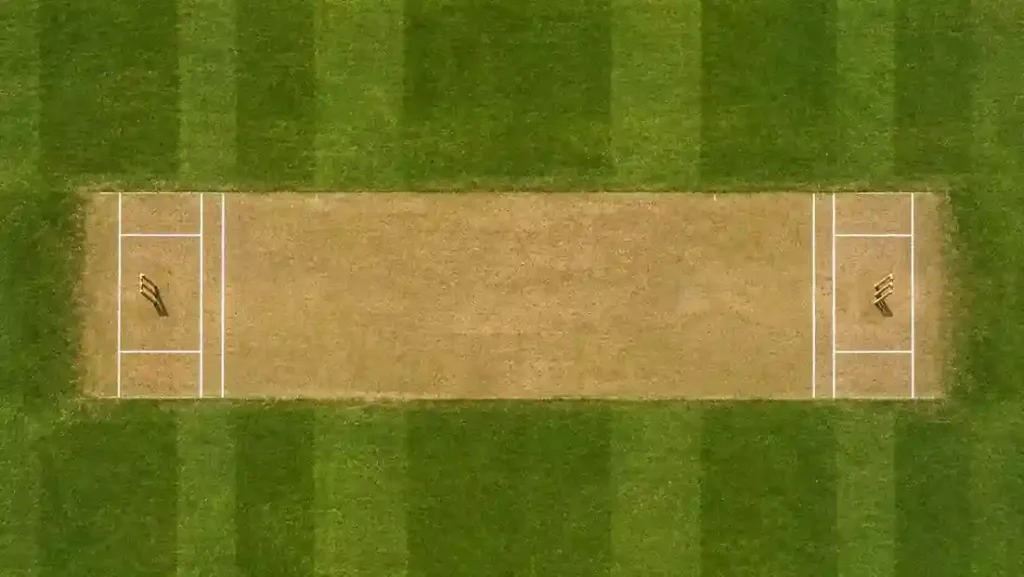
| Pitch Length | 22 yards (20.12 m) |
| Pitch Width | 10 feet (3.05 m) |
| Popping Crease to Bowling Crease | 4 feet (48 inches / 1.22 m) |
| Stumps Height | 28 inches (71.1 cm) |
| Stumps Width (Wicket) | 9 inches (22.9 cm) |
| Bail Length | 4.25 inches (10.8 cm) |
| Ball Weight | 5.5–5.75 oz (156–163 g) |
| Ball Circumference | 8.81–9.00 inches (22.4–22.9 cm) |
| Bat Maximum Width | 4.25 inches (10.8 cm) |
| Bat Maximum Length | 38 inches (96.5 cm) |
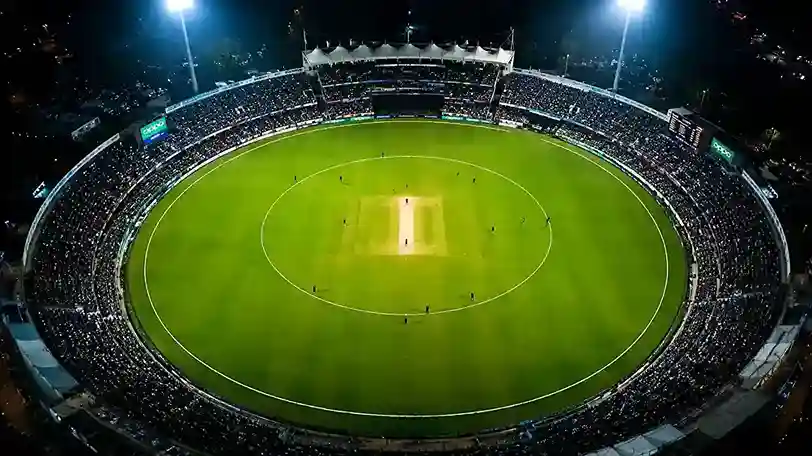
| 30-Yard Circle Radius | 30 yards (27.43 m) |
| Minimum Boundary (Men’s) | 65 yards from pitch centre (59.4 m) |
| Maximum Boundary | 90 yards from pitch centre (82 m) |
Where Did 22 Yards Actually Come From?
The 22-yard pitch length isn’t an arbitrary cricket invention — it comes from land surveying. In 1620, mathematician Edmund Gunter created a measuring chain exactly 22 yards long for surveying English farmland, and it became the standard tool for marking out distances on common land. Since early cricket was played on that same common land, groundsmen simply used the surveyor’s chain that was already lying around, and “one chain” became the pitch length by default.
Has the Pitch Length Ever Changed? No — And That’s Rare
The earliest surviving Laws of Cricket, the Code of 1744, fixed the distance between the two sets of stumps at 22 yards, and it has never been altered since — a run of more than 280 years. Before that formal code existed, local matches reportedly used inconsistent distances, with some grounds as short as 18 yards and others as long as 24 yards. Once 1744 standardized it, 22 yards stuck permanently, making it one of the only measurements in cricket that has genuinely never changed.
The Crease Distance That Did Change
While the pitch length itself never moved, the distance between the bowling crease and the popping crease did. The 1744 code set it at 46 inches. In 1819, it was increased to 48 inches (4 feet) — a 2-inch change that has held ever since and remains the modern standard.
Stumps and Bails: A Long Evolution
The wicket has changed more than almost any other part of the game. Here’s the full timeline:
| Year | Change | Detail |
|---|---|---|
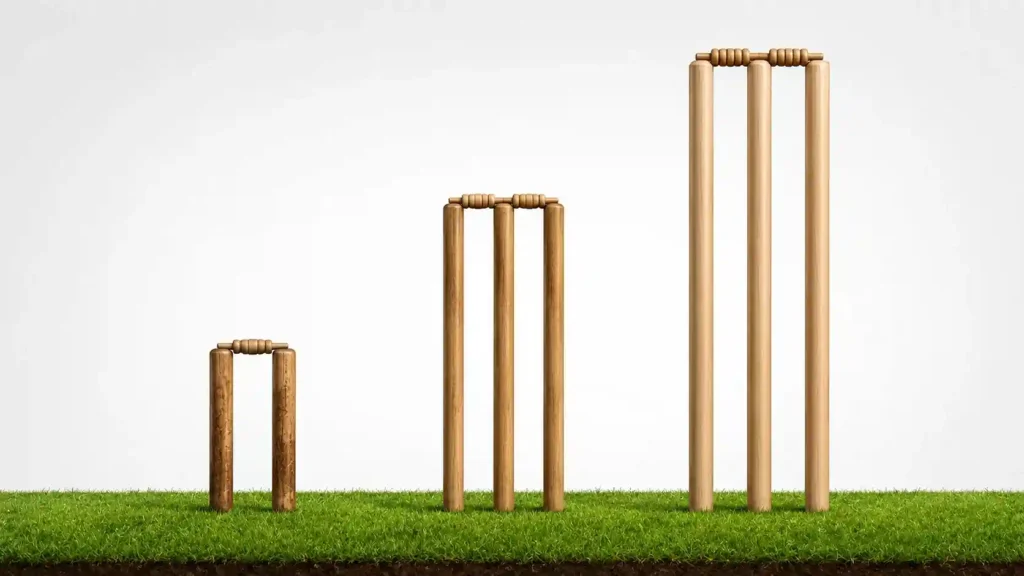
| 1744 | Original Wicket Size | Stumps 22 inches tall, wicket 6 inches wide; only 2 stumps and 1 bail. |
| 1775 | Third Stump Added | After a famous single-wicket match where a ball passed clean between the two stumps without knocking off the bail. |
| c. 1786 | Two Bails Introduced | First mentioned in a regional edition of the Laws; not standard until the early 1800s. |
| c. 1823 | Wicket Enlarged | Increased to 27 inches tall by 8 inches wide. |
| 1931 | Modern Size Introduced | 28 inches by 9 inches made optional. |
| 1947 | Modern Size Made Compulsory | 28 by 9 inches became the mandatory standard still used today. |
📊 Overall Change (1744 → 1947)
Over roughly two centuries, stump height increased from 22 inches to 28 inches and wicket width grew from 6 inches to 9 inches. These changes were introduced to provide bowlers with a slightly larger target as bats evolved and batting techniques became more advanced.
The Cricket Ball’s Changing Specifications
| Year | Change | Detail |
|---|---|---|
| 1744 | Original Law | Only the ball’s weight was regulated, set between 5 and 6 ounces. No size or circumference specification existed. |
| 1838 | First Size Regulation | Ball circumference officially standardized at 9.00–9.25 inches. |
| 1927 | Modern Circumference Introduced | The permitted circumference was reduced slightly to 8.81–9.00 inches. |
| Present | Current Standard | Ball weight remains 5.5–5.75 oz (156–163 g) with a circumference of 8.81–9.00 inches. |
📊 Key Changes Over Time

The Bat’s Fixed Width — And Why It Exists
| Year | Change | Detail |
|---|---|---|
| 1771 | Bat Width Limited | After Thomas White used an extremely wide bat that nearly covered the entire wicket, the Laws were amended to set a maximum bat width of 4.25 inches. |
| 1835 | Bat Length Standardized | The maximum legal bat length was fixed at 38 inches. |
| Present | Current Standard | Maximum bat width remains 4.25 inches and maximum bat length remains 38 inches, exactly as specified in the Laws. |
📊 Historical Significance
From No Boundaries to Boundary Ropes
| Year | Change | Detail |
|---|---|---|
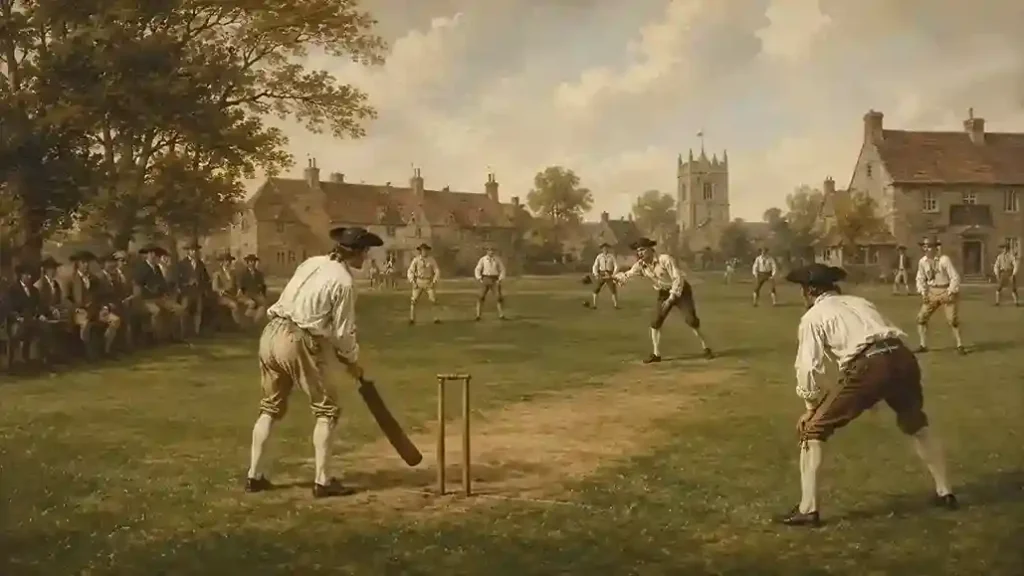
| Before 1860s | No Boundary System | There was no boundary rope. Every run had to be physically completed, regardless of how far the ball travelled. |
| 1842 | Famous 9-Run Shot | A match famously produced 9 runs from a single delivery because all runs had to be run between the wickets. |
| 1860s | Boundary Ropes Introduced | Ropes became common primarily to hold back spectators, but any ball crossing the rope still counted only 4 runs. |
| 1909 | Six Runs Introduced | English cricket authorities agreed that a ball clearing the boundary on the full should be worth 6 runs. |
| 1947 | Boundary Laws Formalized | Boundaries were officially written into the Laws of Cricket for the first time. |
| Present | ICC Standard | Boundaries must be between 65 and 90 yards from the centre of the pitch, with a minimum 3-yard safety buffer beyond the rope. |
📊 Modern Boundary Regulations
The 30-Yard Circle: A 20th Century Invention
Unlike the pitch or stumps, the 30-yard circle didn’t exist for most of cricket’s history — it only appeared once limited-overs cricket needed a way to stop teams from parking every fielder on the boundary. Its restrictions have been rewritten repeatedly:
| Year | Change | Detail |
|---|---|---|
| 1992 | Powerplay Introduced | Maximum 2 fielders allowed outside the circle for the first 15 overs, then up to 5 fielders for the remainder of the innings. |
| 2005 | Mandatory Powerplay Reduced | The compulsory restriction was cut to the first 10 overs. Two additional 5-over powerplays were introduced at the bowling team’s discretion. |
| 2008 | Batting Team Powerplay | The batting side gained the right to choose one of the two discretionary powerplays. |
| 2011 | Timing Restricted | Discretionary powerplays could only be taken between the 16th and 40th overs. |
| 2012 | Rule Simplification | Two-phase system introduced: first 10 overs (max 2 outside) and a batting powerplay before the 40th over (max 3 outside). Outside-field cap reduced from 5 to 4 during non-powerplay overs. |
| 2015 | Modern ODI System | Batting powerplay abolished. Teams may have up to 5 fielders outside the circle during the final 10 overs. |
📊 Current Playing Conditions
Why Did All These Measurements Change?
The Core Principle
Almost every major change to cricket’s dimensions and playing conditions can be traced back to a single objective: maintaining a fair contest between bat and ball as equipment, playing surfaces, player fitness, and batting techniques evolved.
Bigger Stumps
Wickets gradually became larger to give bowlers a fairer target as batting methods became more effective and defensive play improved.
Bat Width Limit
The 4.25-inch bat-width restriction was introduced after a player attempted to exploit the Laws with an oversized bat that nearly covered the entire wicket.
Boundary Rules
Modern boundary regulations reward attacking stroke play and help create an exciting balance between risk and reward.
30-Yard Circle
Fielding restrictions discourage excessively defensive tactics, helping limited-overs cricket remain attractive for players and spectators.
📏 The Great Exception: The Pitch
Unlike many other measurements, the 22-yard (20.12 m) pitch length has remained virtually unchanged throughout cricket’s history. The reason is simple: it already produced an exceptionally balanced contest between batting and bowling from the very beginning, leaving little need for adjustment.
FAQ: Cricket Pitch Measurements
Conclusion
The cricket pitch itself has barely moved an inch since 1744, but almost everything around it — the stumps, the ball, the bat, the boundary, and the fielding circle — has been reshaped again and again to keep the game fair, competitive, and entertaining.
Pitch Fixed
The 22-yard pitch length became part of the earliest written Laws and has never changed.
Three Stumps
A third stump was added to eliminate the gap that allowed balls to pass harmlessly through.
Six Runs
Clearing the boundary on the full became worth six runs, rewarding attacking stroke play.
30-Yard Circle
Fielding restrictions introduced a new tactical layer to limited-overs cricket.
⚖️ A Constant Search for Balance
Cricket’s history is largely a story of administrators adjusting the game’s dimensions whenever advances in equipment, technique, or playing conditions threatened the balance between bat and ball.
Bigger stumps helped bowlers.
Bat limits prevented unfair advantages.
Boundaries improved scoring and spectacle.
Fielding circles discouraged negative tactics.
For more on how today’s rules work in practice, check out our Cricket Rules Explained: The Ultimate Data-Backed Guide and Cricket Fielding Positions Explained.