
If you’re new to sports, you’ve probably wondered: what is cricket, exactly? In simple words, cricket is a game played between two teams using a bat and a ball. Each team gets a turn to bat and a turn to bowl (throw the ball), and the team that scores the most runs wins.
But cricket is much more than that one line. Its formats, rules, and traditions run deep — so deep that people around the world call it “the gentleman’s game.” In this guide, we’ll walk through cricket’s history, basic rules, formats, and why millions of fans love it.
What Is Cricket? The Basics
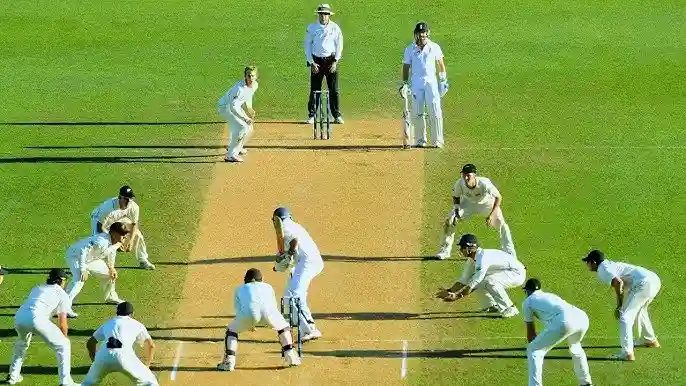
Cricket is a bat-and-ball sport played between two teams of 11 players each. The match happens on a rectangular strip called a pitch, with three wooden stumps standing at each end. One team bats and tries to score runs, while the other team bowls and fields, trying to get batters out and stop runs.
Whichever team scores more runs wins the match. It sounds simple, but underneath this basic idea are many rules and strategies that make the game exciting.
A Short History of Cricket
Cricket began in 16th century England, where it started as a simple village game. By the 18th century, it had become England’s national sport, and through British colonization, it spread to countries like India, Australia, South Africa, and the West Indies.
The first official Test match was played in 1877 between Australia and England. Since then, cricket has changed a lot — limited-overs cricket started in the 1970s, and the T20 format was introduced in 2003, making the sport even more popular around the world.
How Cricket Is Played — Basic Rules
The Pitch and Equipment
Cricket is played on a 22-yard-long rectangular pitch. At each end stand the stumps—three vertical sticks with two small pieces called bails resting on top.
The main equipment includes:
- Cricket Bat
- Cricket Ball
- Protective Pads
- Batting Gloves
- Helmet
Batting Basics
Two batters from the batting team are on the field at the same time:
- Striker – Faces the bowler and plays the ball.
- Non-Striker – Waits at the opposite end of the pitch.
A batter’s objective is to score runs by:
- Running between the wickets.
- Hitting a boundary for 4 runs.
- Hitting the ball over the boundary for 6 runs.
Bowling Basics
A bowler from the fielding team delivers the ball toward the batter, aiming to dismiss them or prevent runs.
Each over consists of 6 legal deliveries. After an over is completed, another bowler bowls from the opposite end.
Fielding Positions
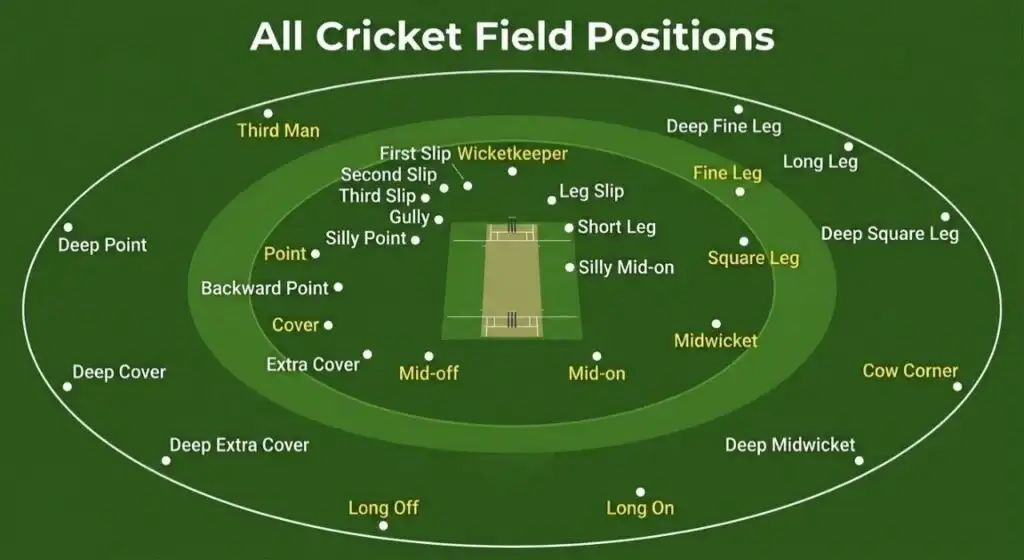
Apart from the bowler and wicketkeeper, the remaining 9 fielders are placed strategically around the field.
- Slip
- Gully
- Cover
- Mid-on
- Mid-off
These positions help stop runs and create catching opportunities.
Dismissals — How a Batter Gets Out
A batter can be dismissed in several different ways:
- Bowled – The ball hits the stumps.
- Caught – A fielder catches the ball before it touches the ground.
- LBW (Leg Before Wicket) – The ball hits the batter’s pad while heading toward the stumps.
- Run Out – The stumps are broken while the batters are running.
- Stumped – The wicketkeeper removes the bails while the batter is outside the crease.
The Formats of Cricket
Cricket is played in three main formats, and each one has its own pace, strategy, and style of play.
Test Cricket
Test Cricket is the oldest and longest format of the game. A match is played over five days, with unlimited overs allowed each day. It is often called the “purist’s format” because it rewards patience, consistency, and strong batting and bowling techniques.
One Day International (ODI)
One Day International (ODI) matches are completed in a single day. Each team gets 50 overs to bat. Introduced in the 1970s, this format is widely used in major tournaments, including the ICC Cricket World Cup.
T20 Cricket
T20 Cricket is the shortest and most exciting format, where each team has only 20 overs. Fast scoring, big shots, and thrilling finishes have made T20 extremely popular worldwide. Leagues like the Indian Premier League (IPL) have helped attract millions of new cricket fans.
Major Cricket Tournaments
Cricket fans around the world eagerly follow several prestigious international and domestic tournaments every year.
- ICC Cricket World Cup (ODI Format)
- ICC T20 World Cup
- The Ashes (Test Series between England and Australia)
- Indian Premier League (IPL)
- ICC World Test Championship
Why Is Cricket So Popular?
Cricket is the second most-watched sport in the world, after football. A big reason for this is South Asia — India, Pakistan, Bangladesh, and Sri Lanka — where cricket isn’t just a sport, it’s an emotion. On top of that, the T20 format has made the game shorter and more exciting, helping it connect with younger audiences too.
Simple Cricket Terms Every Beginner Should Know
- Over – A set of 6 legal deliveries bowled by the same bowler.
- Wicket – Refers to either the three stumps and two bails or the dismissal of a batter.
- Century – When a batter scores 100 or more runs in a single innings.
- Duck – When a batter is dismissed without scoring any runs.
- All-rounder – A player who is skilled at both batting and bowling.
- Boundary – A shot that reaches or crosses the boundary rope, scoring 4 runs (after bouncing) or 6 runs (without bouncing).
Conclusion
So, what is cricket? Now you know: it’s a strategic, skill-based sport that mixes patience, power, and precision. Whether you enjoy the slow-burn drama of Test cricket or the fast-paced action of T20, there’s something in this game for every kind of fan.